Why Private Offices at Expansive Are Ideal for Therapists
Finding the right therapy private office can feel overwhelming. The cost of traditional standalone spaces, rigid lease agreements, and the challenge of maintaining proper confidentiality often create barriers for therapists trying to establish or grow their practices. Many clinicians find themselves choosing between affordability, flexibility, and having a professional space their clients deserve.
Private offices for therapists within a coworking space have emerged as a practical alternative that addresses these concerns. Unlike traditional medical office buildings or open coworking environments, these private offices offer therapists a solution that balances cost, flexibility, and provide the confidential atmosphere essential for mental health care.
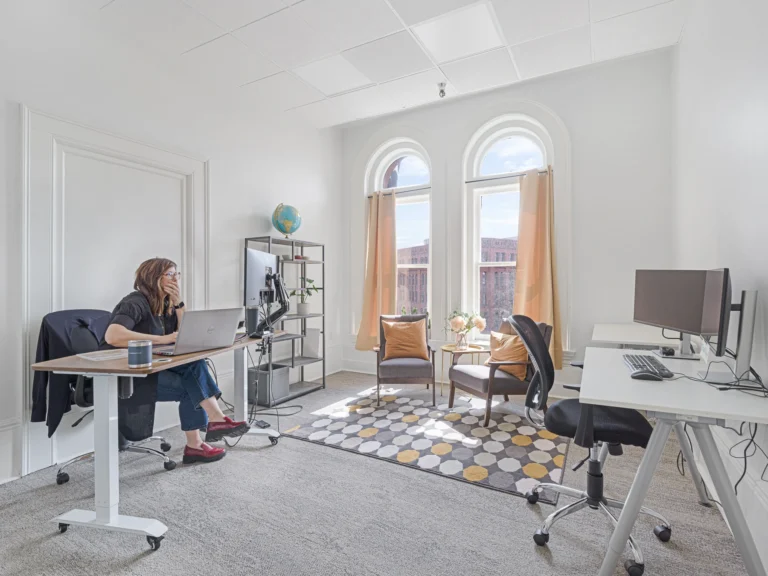
It’s important to understand what makes these spaces different. Private offices in coworking environments aren’t shared workstations or open floor plans. They’re fully enclosed, dedicated rooms designed to provide the same level of privacy and professionalism as traditional therapy offices, but with far greater flexibility and support built in.
Private offices within a coworking space support the unique needs of therapy practices, from maintaining confidentiality and creating patient-centered environments to offering the flexibility and cost structure that help practices thrive.

Why Therapy Requires a Dedicated Private Office
Confidentiality isn’t just a preference in therapy; it’s a legal and ethical requirement. Clients share deeply personal experiences, emotions, and vulnerabilities during sessions. Without the assurance of HIPAA compliance and complete privacy, trust breaks down and the therapeutic process suffers. This makes a dedicated therapist office space essential for any mental health practice.
A therapy private office differs fundamentally from general coworking environments. Open workspaces, shared desks, and communal areas may work well for consultants or remote workers, but they cannot provide the clinical separation therapy requires. The role of a dedicated space extends beyond protecting information. It supports the professional and ethical standards that define quality mental health care, creates boundaries between personal and professional life, and signals to clients that their care is the top priority.
Private offices in coworking spaces offer a patient-centered alternative to traditional therapy offices. They provide the enclosed, professional environment therapy requires while eliminating many of the logistical and financial challenges that come with standalone medical office space.

Privacy and Soundproofing That Protect Client Trust
The design features that make private offices suitable for therapy go beyond simply having four walls and a door. Clients need to speak freely about difficult topics without worrying that someone in the next room or hallway can hear them. Even the perception of being overheard can prevent clients from opening up completely, which directly impacts the quality and effectiveness of treatment.
Expansive’s therapy private offices are specifically designed to prevent conversations from being overheard. These spaces feature solid walls, proper sound insulation, and layouts that create separation from other work areas. Unlike open coworking environments where conversations easily carry across shared spaces, enclosed therapy offices ensure that what happens in session stays in session.
When clients feel confident their privacy is protected, they’re more likely to share openly, process difficult emotions, and engage fully in their treatment. This sense of safety forms the foundation of the therapeutic relationship and influences whether clients return for future sessions and refer others to your practice.
Creating a Calm, Professional Environment for Clients
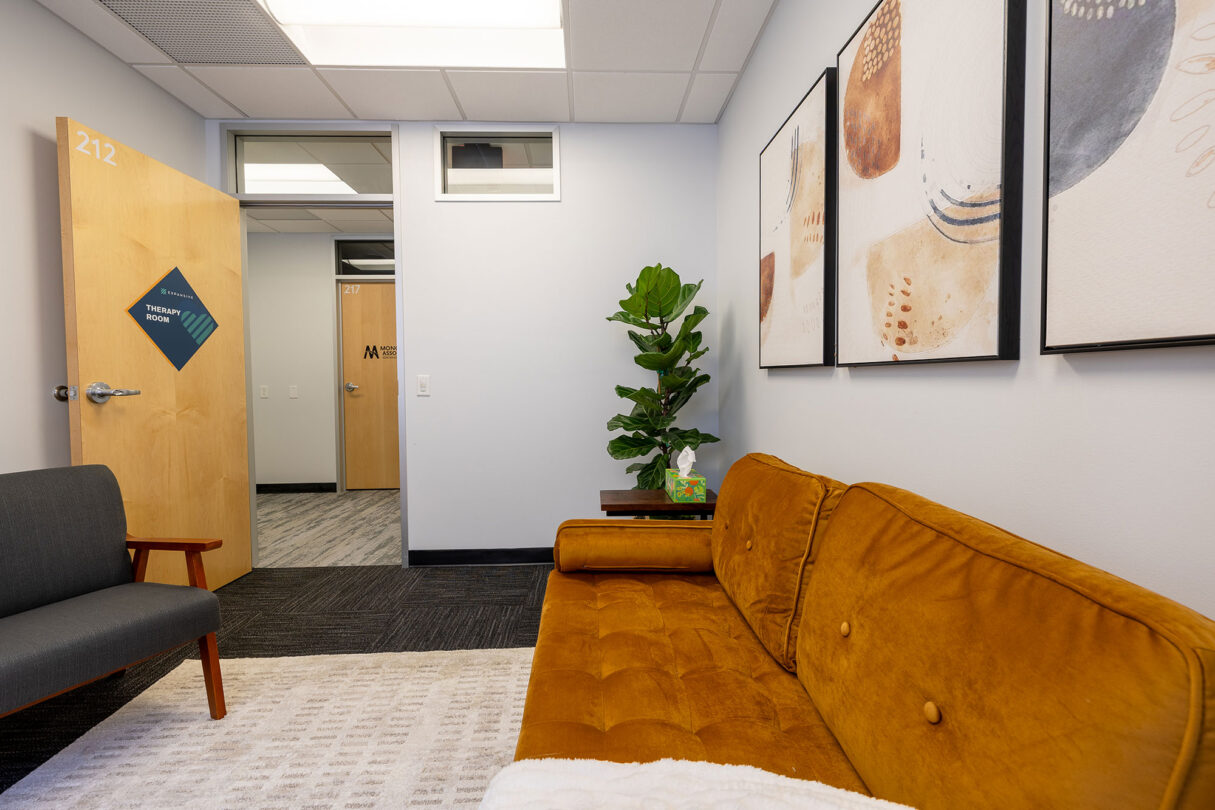
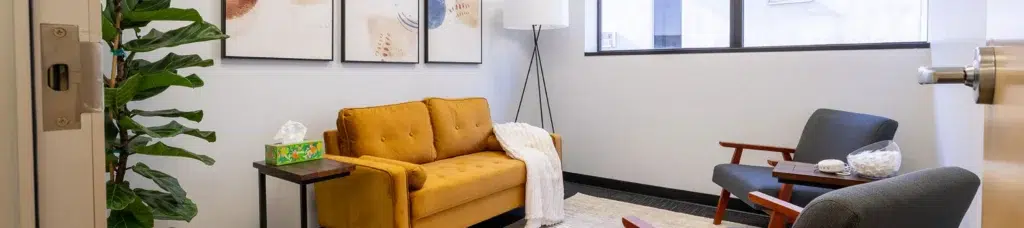
A calm, professional setting helps clients feel emotionally safe, reduces distractions, and creates a safe space for the focus and reflection therapy requires. When the environment feels thoughtfully designed and consistent, clients can direct their energy toward the therapeutic work rather than adjusting to unfamiliar or unsettling surroundings.
The importance of a consistent, professional setting extends beyond aesthetics. Clients often associate the therapy space itself with feelings of safety and progress. Returning to the same well-maintained office week after week helps build continuity in treatment and reinforces the stability of the therapeutic relationship. This consistency becomes particularly important for clients dealing with anxiety, trauma, or trust issues.
Thoughtfully designed private offices stand in sharp contrast to informal or makeshift therapy environments. A dedicated private office signals that the therapist takes their work seriously and has invested in creating a space worthy of the important work happening inside it.
Flexible Therapy Office Space That Grows With Your Practice
Traditional therapy office leases often require long-term commitments that don’t align with how practices actually grow. Therapists building new practices face uncertainty about future work loads, while established clinicians may need to adjust their schedules or explore hybrid models combining in-person and virtual sessions. Flexible lease terms allow therapists to adapt their space needs as circumstances change, without the financial risk of being locked into rigid agreements.
This flexibility particularly benefits several groups of providers:
- Part-time therapists who see clients only a few days per week
- New practices still establishing their client base
- Clinicians transitioning to hybrid models mixing in-person and telehealth sessions
- Therapists testing new specializations or expanding service offerings
- Practitioners managing variable schedules
A private office at Expansive allows therapists to adjust space needs without long-term commitments. Rental commitments can start with a short-term lease for just a few months, giving clinicians the freedom to scale up as their practice grows or scale down during slower periods. This approach removes the pressure of committing to expensive leases before knowing whether the space and location truly work for your practice.
Flexibility represents a key advantage over traditional therapy office leases. Rather than being trapped in a space that no longer fits your needs, or paying for unused office time, you can adjust your arrangement to match your current reality. This adaptability reduces financial stress and lets you focus on providing excellent care rather than worrying about overhead costs.
Cost-Effective Therapist Office Space With Shared Amenities
Private offices within a coworking space provide access to professional amenities that would be expensive or impractical to maintain in a standalone office. The key lies in thoughtful design that keeps therapy rooms completely separate from communal areas.
Shared amenities therapy clients typically access include:
- Reception and lobby areas where clients check in before sessions
- Waiting areas designed for comfort and privacy
- Kitchen facilities and break rooms for use between appointments
Shared amenities that provide additional value to mental health providers include:
- High-speed, secure internet and technology infrastructure
- Professional mail and package handling
- Conference rooms available for rent for team or group meetings
- Secure access to private office spaces
- Secure building access with 24/7 keyless entry systems

The importance of keeping therapy rooms separate from communal areas cannot be overstated. While therapists benefit from shared facilities during non-clinical time, therapy sessions themselves must remain completely private. Well-designed therapy private offices within Expansive’s coworking spaces understand this distinction.
Professional amenities support therapists without interfering with sessions. Reliable internet enables telehealth when needed, professional reception areas make positive first impressions on clients, and secure building access protects everyone’s safety. These features would require significant investment in a traditional office but come included in coworking arrangements.
Private office coworking strikes a balance between convenience and confidentiality. Therapists gain access to resources and support services that enhance their practice while maintaining the enclosed, private therapy office essential for client care.
Convenient Locations That Remove Barriers to Mental Health Care
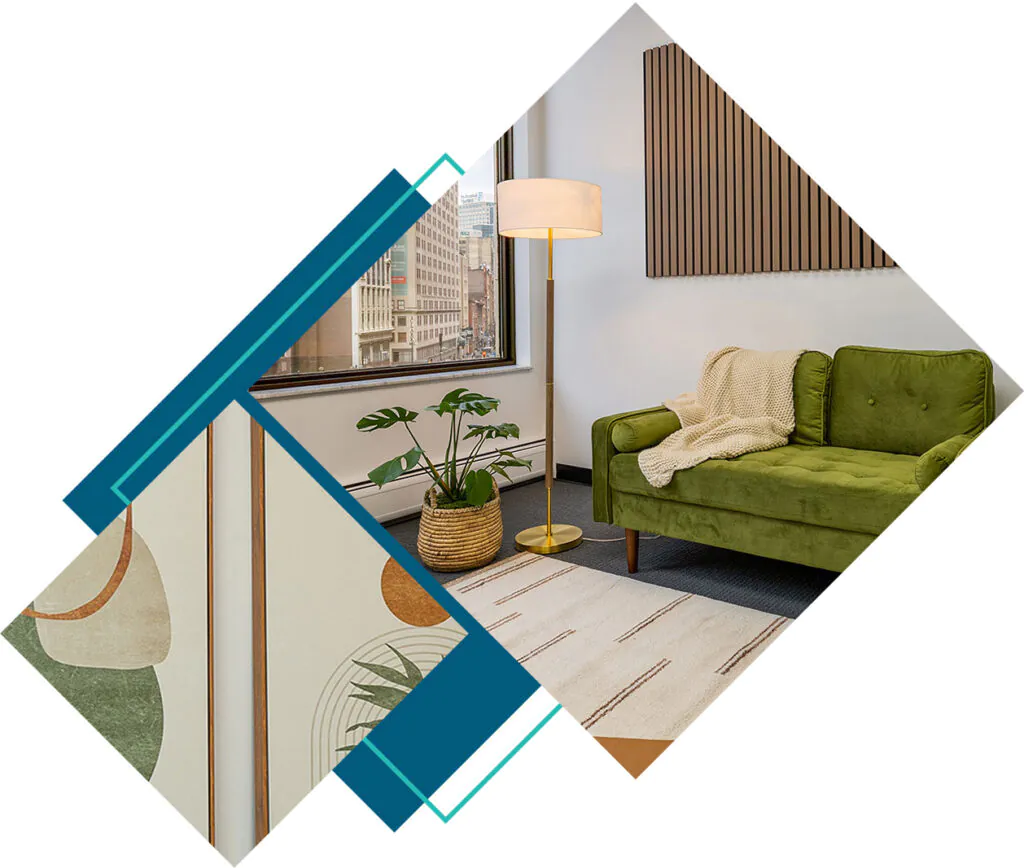
Accessibility matters in mental health treatment. When therapy offices are difficult to reach or require significant travel time, clients struggle to maintain consistent attendance. Most Expansive locations are situated in urban settings and downtown areas, making it easy for clients to schedule sessions during lunch breaks or before and after work.
This convenience benefits both therapists and clients. Professionals can fit therapy into their workday without taking extensive time off, while therapists can attract clients who might otherwise struggle to find time for appointments. Convenient locations remove practical barriers to care and support the regular, ongoing sessions that lead to meaningful therapeutic progress.
Questions? We’ve Got Answers
Why are private offices essential for therapy practices?
Private offices protect client confidentiality and create the safe, enclosed environment necessary for effective therapy. They ensure conversations remain private and demonstrate professional commitment to ethical standards.
How do private offices within coworking spaces protect client confidentiality?
Private offices within coworking spaces designed for therapists feature fully enclosed offices with soundproofing and layouts that separate treatment rooms from shared areas. Secure office spaces further protect client privacy.
Can private offices within coworking spaces provide a therapeutic environment?
Yes, when properly designed with enclosed offices, sound control, and thoughtful layouts that maintain separation from communal spaces. These professional private offices are HIPAA-compliant. Plus the consistent setting supports the trust and focus therapy requires.
What types of therapists benefit most from a private office at Expansive?
Part-time clinicians, new practices, therapists using hybrid in-person and virtual models, and anyone needing cost-effective flexibility benefit significantly. Established practices looking to reduce overhead or test new locations also find value.
How do costs compare to traditional therapy office space?
Private offices in coworking spaces typically cost significantly less than traditional leases. Shared amenities, included utilities, furnished spaces, and flexible terms reduce both upfront costs and ongoing overhead.
Find the Right Therapy Private Office for Your Practice
The right office environment does more than provide a place to see clients. It supports the trust, comfort, and quality of care that define successful therapy practices. When clients feel safe and respected in their therapy space, they engage more fully in treatment and are more likely to continue working toward their goals.
A private office within a coworking environment represents a sustainable solution for modern therapy practices. It balances the privacy and professionalism clients deserve with the flexibility and cost structure therapists need to build and maintain successful practices. Rather than choosing between affordability, quality, and flexibility, a therapist can access all of these elements in one thoughtfully designed space at Expansive.
This approach reduces operational burden while supporting practice growth. Instead of managing building maintenance, negotiating utilities, or furnishing office space from scratch, therapists can move into a ready-to-use professional environment and focus entirely on client care. As the practice evolves, the space can evolve with it.
Learn how a private therapy office in a professional coworking space could support your practice. Schedule a tour at an Expansive location near you to experience the difference firsthand.