What Counselors Should Look for When Choosing a Private Office Space

Finding the right office space for therapists is a different process than finding office space for most other professionals. Counselors and therapists have specific needs that a typical office or coworking desk cannot meet. Privacy, soundproofing, accessibility, and the overall feel of the space all affect the therapeutic relationship and, by extension, your clients’ outcomes.
Whether you are launching a private practice for the first time or moving an existing one, this guide covers the therapy office requirements that matter most and how to evaluate them before you sign anything.
Why the Right Office Space for Therapists Matters More Than You Think
Your office is part of the therapeutic experience. Clients form impressions the moment they walk in. A cramped waiting area, thin walls, or a noisy hallway can undermine the sense of safety and confidentiality that effective therapy depends on.
The wrong space can also create compliance problems. HIPAA requires that client conversations remain confidential, which means your office must prevent conversations from being overheard. ADA regulations apply to any client-facing professional space. And if you offer telehealth, your internet connection needs to be reliable enough to support uninterrupted video sessions.
Getting these details right from the start saves you from costly moves and disruptions later.
Soundproofing and Acoustic Privacy Come First
This is the single most important therapy office requirement. If a client’s voice can be heard in the hallway or in an adjacent office, you have a confidentiality problem.
When evaluating a private practice office space, ask specific questions. What is the wall construction? Standard drywall with open space above a drop ceiling will not block sound effectively. You need walls that run from the floor slab to the structural ceiling, or spaces that include sound-dampening insulation.
Test it yourself. Bring someone along on your tour. Have them speak at a normal conversational volume inside the office while you stand outside the door and in the hallway. If you can make out words, the soundproofing is not adequate for counseling sessions.
White noise machines help, but they are a supplement, not a substitute for proper construction. The building’s design should do the heavy lifting.
Client Privacy Goes Beyond the Session Room
Soundproofing protects the session itself. But therapist office needs extend to the entire client experience. Think about what happens before and after the appointment.
A shared waiting area where your 2 p.m. client sits next to your 3 p.m. client creates discomfort. Clients may not want to be seen entering a therapist’s office at all, depending on their situation. Look for spaces with separate waiting areas or staggered entry points that reduce the chance of clients crossing paths.
Consider the building directory and signage as well. Some therapists prefer a discreet listing. Others want visibility for marketing purposes. Make sure the building accommodates your preference.
Explore Private Offices Designed for Professionals
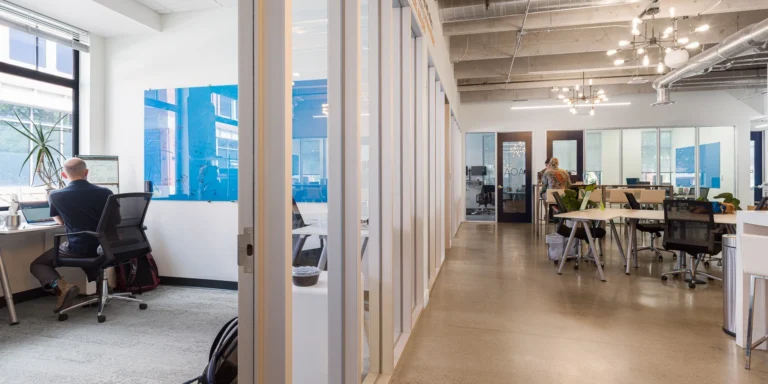
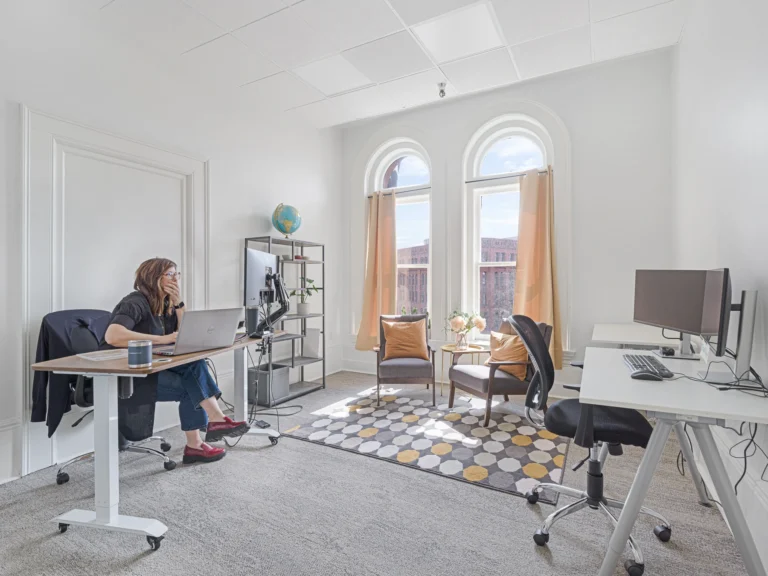
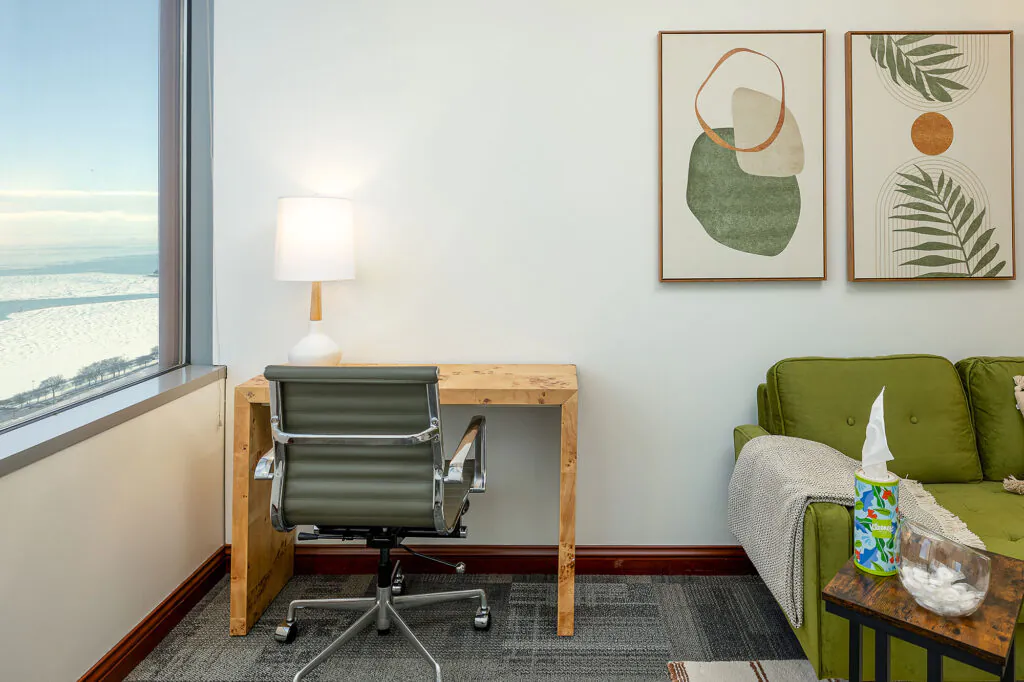
Expansive offers private, fully furnished offices in professionally managed buildings across the U.S. Every space includes soundproofed walls, dedicated HVAC, and controlled access. Because Expansive owns and operates its properties, the design standards are consistent from location to location. Schedule a tour at expansive.com or call 877-301-6217 to see how a private office works for your practice.
ADA Compliance and Building Accessibility
Any office space where you see clients must meet ADA standards. This includes accessible parking, building entrance access, elevator access if you are not on the ground floor, accessible restrooms, and doorway widths that accommodate wheelchairs and mobility devices.
Do not assume a building is compliant just because it looks modern. Walk the full path a client with a mobility limitation would take, from the parking lot to your office door. Check for automatic door openers, ramp grades, and restroom layout. If any part of the path is not accessible, cross that space off your list.
Location, Parking, and the Client Experience
Counselor office space works best in locations that are easy to reach. Your clients are often coming from work, home, or school. A central location with straightforward access from major roads or public transit reduces no-shows and late arrivals.
Parking matters more than many therapists expect. If clients have to circle a lot for ten minutes or pay for expensive garage parking, it adds friction to every appointment. Look for locations with free or affordable parking within a short walk of the building entrance.
Also consider the neighborhood. A counseling office in a professional, well-maintained building surrounded by other professional services feels different from one in a strip mall or an aging office park. The setting contributes to the sense of safety and professionalism that clients need.
Internet Reliability for Telehealth Sessions
If you offer any telehealth appointments, internet reliability is a non-negotiable therapy office requirement. A dropped video call during a session is more than an inconvenience. It disrupts the therapeutic flow and can feel jarring for clients in vulnerable moments.
Ask about the building’s internet infrastructure. Is it enterprise-grade or consumer-level? Is there a backup connection? What are the typical upload and download speeds? For video sessions, you need a minimum of 10 Mbps upload and 10 Mbps download to maintain a stable, high-quality connection.
At Expansive, all locations include enterprise-grade internet as a standard amenity. You do not need to set up your own ISP account or troubleshoot connectivity issues. The workspace team handles it.
Lease Flexibility for Growing Practices
Many counselors start with a small caseload and grow over time. Signing a multi-year lease before you know what your practice will look like in 18 months is risky. If you add a group practice partner or need a larger space, a rigid lease limits your options.
Month to month or short-term lease arrangements give new and growing practices room to adjust. You can start with a single private office and move to a larger suite as your client base expands. You can also test different locations before committing to one neighborhood long-term.
This kind of flexibility is especially valuable for therapists who are building a practice from the ground up, where the first year is more about finding your rhythm than locking in a permanent location.
Frequently Asked Questions
What features should a counseling office have?
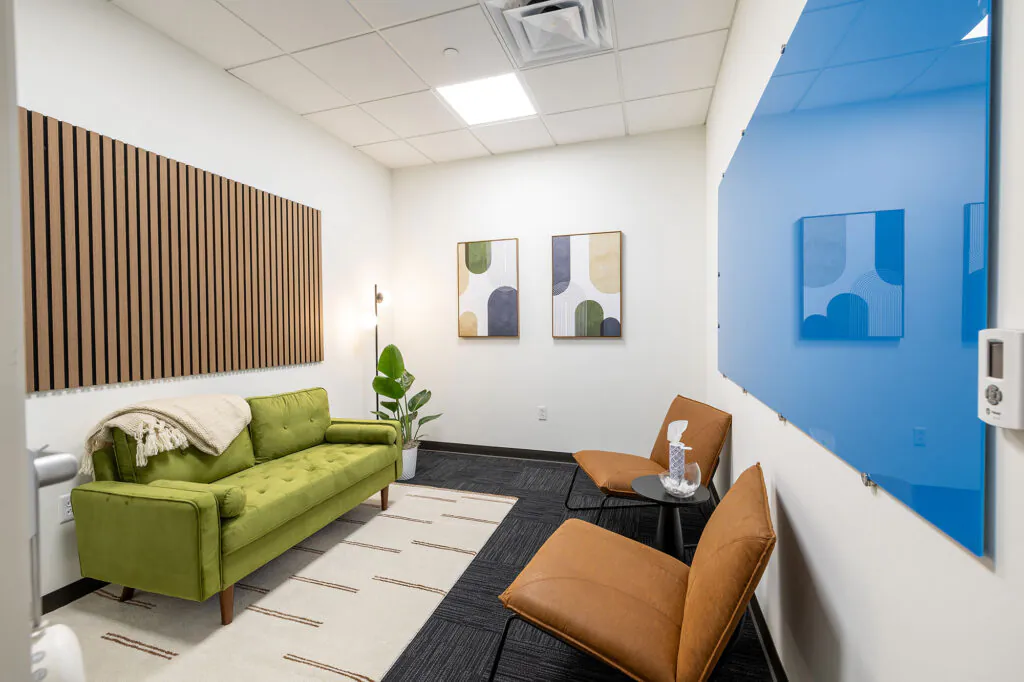
A counseling office should have soundproofed walls, a private entrance or waiting area, ADA-compliant access, reliable internet for telehealth, and a professional, calm environment. The space should feel safe and confidential from the moment a client walks in.
How do I find office space for my therapy practice?
Start by identifying your must-have requirements: soundproofing, ADA access, location, and lease flexibility. Tour multiple spaces and test the sound privacy yourself. Flexible workspace providers like Expansive offer private offices with these features included on monthly terms, which lets you try a space before making a long-term commitment.
What should counselors look for in an office?
Counselors should prioritize sound privacy, client comfort (including waiting area design), building accessibility, reliable internet for telehealth, and flexible lease terms. The office should meet HIPAA requirements for confidentiality and feel professional without being clinical.
Find Office Space Built for Therapists
Expansive offers private, soundproofed offices in professionally managed buildings across the U.S. Every location includes enterprise-grade internet, ADA-compliant access, meeting rooms, and flexible monthly terms. Tour a space near you and see if it fits your practice. Schedule a tour or book your free day pass today.