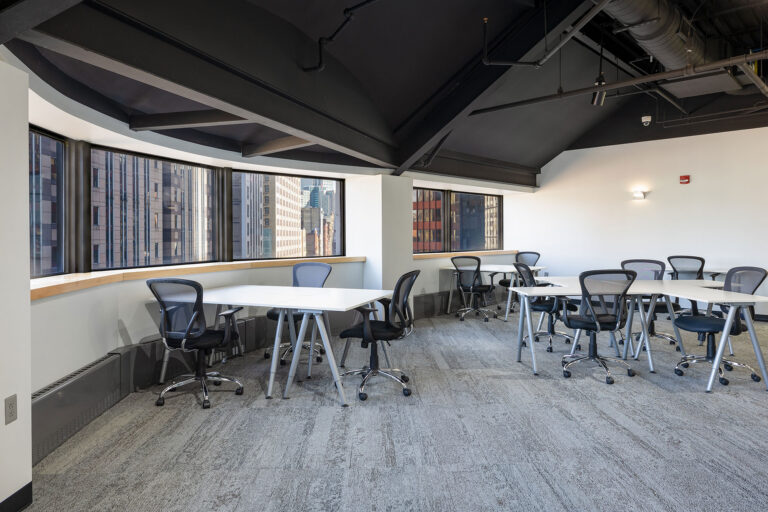
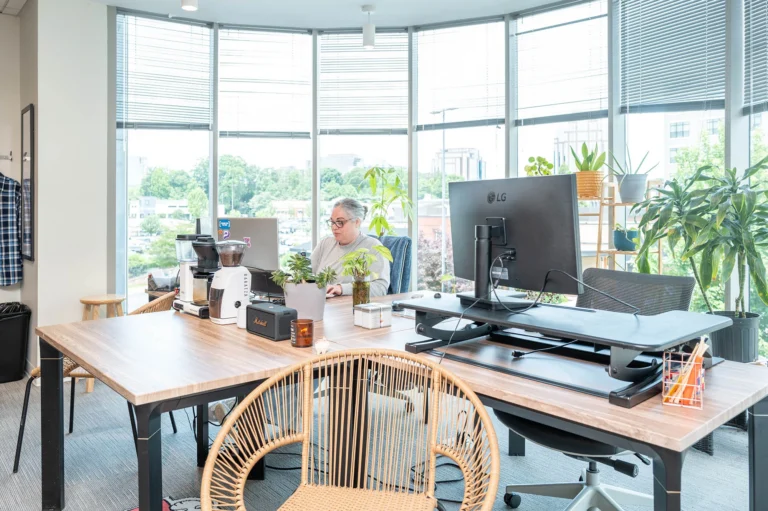
Flexible Workspace Solutions for Technology Companies
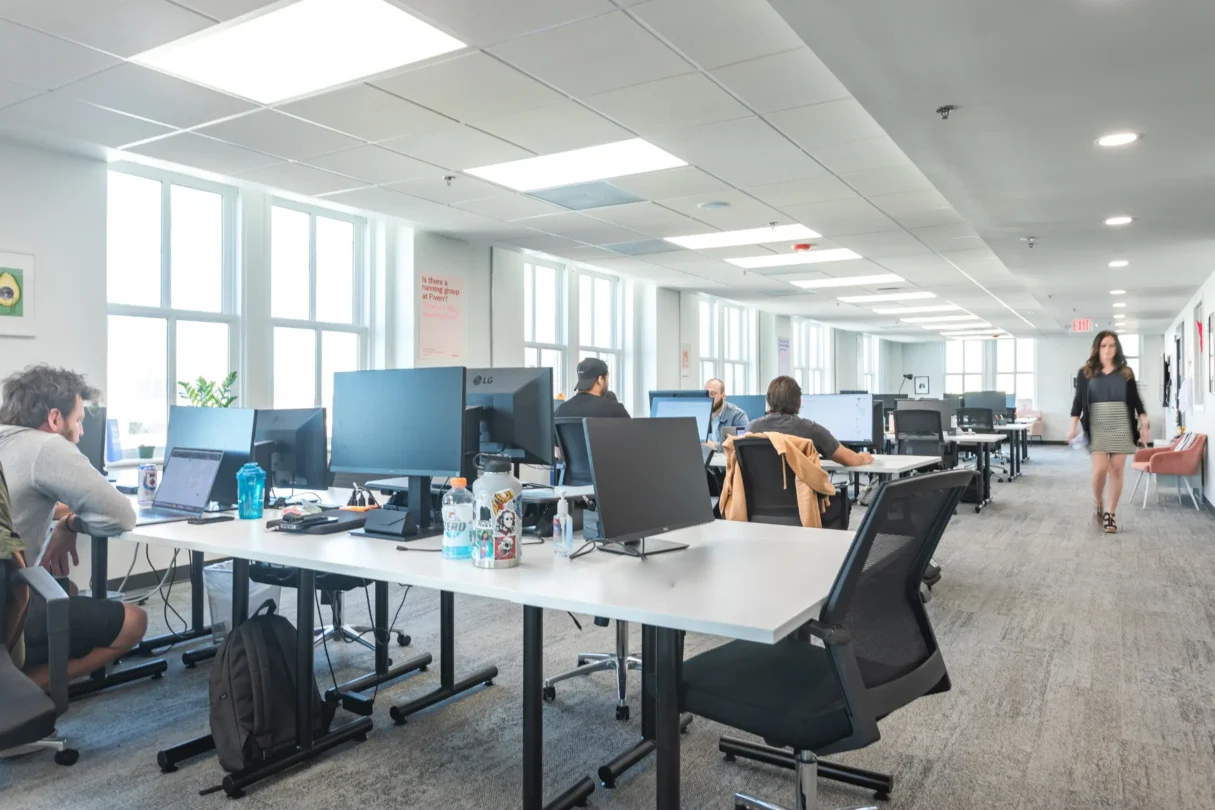
Technology teams don’t grow in straight lines.
A funding round changes the headcount plan. A new hire needs a workstation next week, not next quarter. A hybrid policy gets revisited every few months as leadership figures out what’s actually working for their company. None of that fits neatly into a lease signed three years ago for a team that looked completely different.
Most office space assumes your company will stay still long enough to justify the commitment. Technology companies rarely do, and that’s not a flaw in how they operate. It’s just the nature of the work.
We built our spaces around that reality instead of asking you to plan around ours.
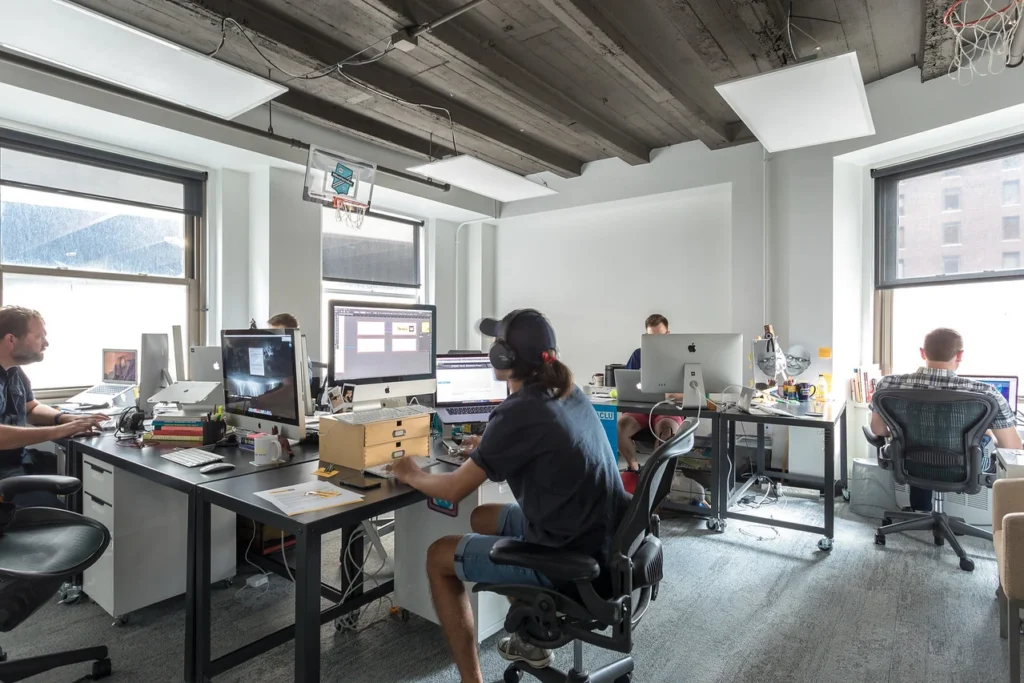
Where Traditional Space Falls Short
A lease is really just a bet on the future; how big your team will be, how much space you’ll need, how long you’ll stay in one place. Technology companies are often asked to make that bet years before they have the information to make it well.
That gap tends to show up as:
- Outgrown space within a year of moving in
- Build-outs that take months you don’t have
- No real visibility into who’s using the office
- A new market, a new standard to figure out
- An office that doesn’t help you win the hire
That last one is easy to underestimate. Building a secure business IT network in traditional commercial space typically runs $8,000–$15,000 upfront, plus $1,500–$4,000 a year to maintain and secure it. And if something goes wrong, network downtime can cost a mid-size company thousands of dollars per hour once it’s live.
Neither of these are dealbreakers on their own. Together, they add up to a workspace that’s working against the business instead of for it.
Workspace should support your mission, not compete with it for resources.

A Different Way to Think About Office Space
Flexible workspace isn’t a smaller version of a traditional office. It’s a different relationship with space entirely, one where the square footage follows the team instead of the other way around.
That looks like:
- Team suites that can grow from a handful of people to well over a hundred
- Private offices for teams that need a consistent home base
- The ability to add space quickly when hiring picks up
- One standard of service whether your team is in one city or five
Culture has become a measurable driver of technology turnover: 57% of employees in a poor culture are already job-hunting. The workspace itself contributes to that perception. 8 in 10 employees at a strong-culture company would recommend it to a job seeker, compared to just 4% at a poor-culture company. In a market where technical talent has options, the workspace is part of the pitch, not a detail to fix later.
It’s a model built around the idea that your space should adjust to your business, not the other way around.
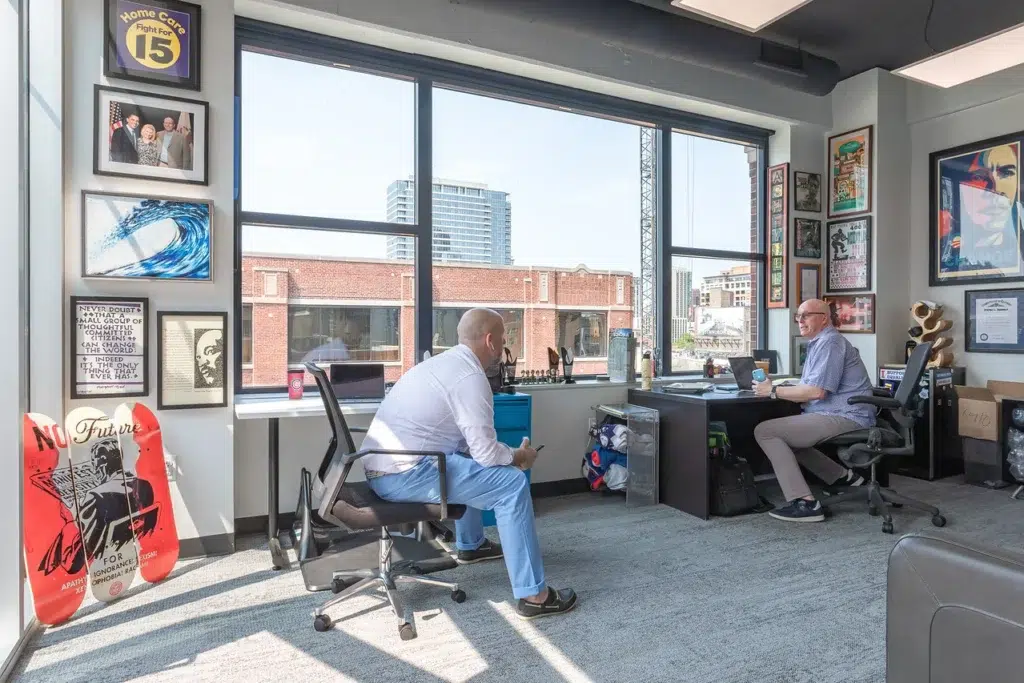
The Infrastructure Question, Answered Honestly
We’ll say this plainly: infrastructure isn’t usually why a technology company chooses us. It’s rarely the deciding factor. But it is very often the question that comes up before a team joins the community, and it deserves a real answer, not a vague one.
So here it is. Expansive is well-equipped with VLAN and private network options for teams that need segmented, secure connectivity. Rack storage for the hardware you’re already running. Space that can be configured around your setup, not a fixed floor plan you have to work around. And IT support that means an actual person, not a ticket that disappears into a queue.
If your team brings its own network hardware and its own way of doing things, which most do, our job is to make sure the space underneath it holds up.
More Than a Place to Work
An office still says something about a company, even in a hybrid world. For technology teams competing hard for talent, it can say more than a job posting does.
The teams that get this right aren’t necessarily the ones with the most amenities. They’re the ones whose space feels like it belongs to a company people actually want to be part of; connected to other businesses doing interesting work, present without being sterile, flexible enough to keep pace with a team that’s still figuring out what “normal” looks like.
That’s the kind of space we build at Expansive.
Find Space That Fits Where You’re Headed
If your team is thinking through team suites, private offices, or coworking space, we’d like to help you find something that actually fits, not just for where you are now, but for where you’re headed next.
Learn more about how expansive supports technology individuals and teams, or schedule a tour at an Expansive near you.